
Introduction
Engineers often face the choice between polyethylene (PE) and glass-reinforced polyester (GPR) when selecting materials for tanks. Both materials have their characteristics, but modern demands for durability, cost-efficiency, and environmental sustainability often favor PE tanks. In this blog, we will explore the differences between these two materials and explain why PE is often the superior choice.
Main Content
1. Material Properties
Polyethylene (PE) is a thermoplastic polymer known for its resistance to chemicals, impact, and UV radiation. It is lightweight, flexible, and has a long service life. Glass-reinforced polyester (GPR) is a composite material made of glass fibers and polyester resin. It is strong and rigid but can become brittle over time, especially when exposed to UV radiation and certain chemicals.
2. Advantages of PE Tanks
a) Corrosion and Chemical Resistance
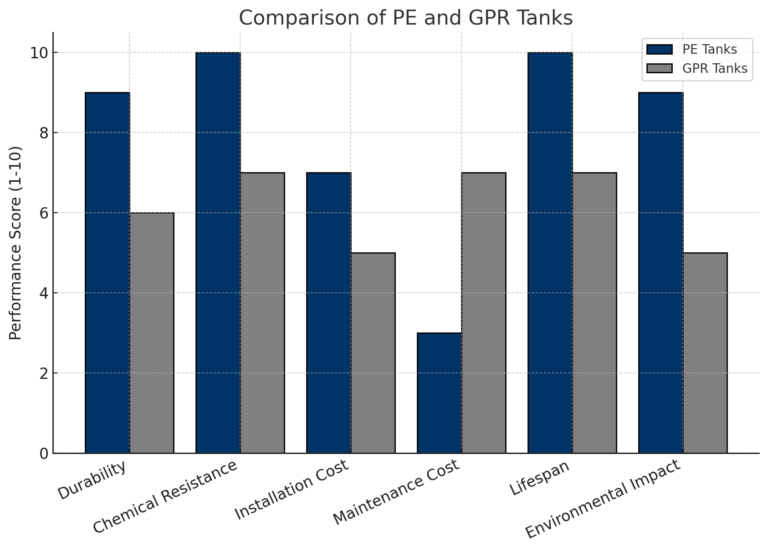
PE tanks offer exceptional resistance to a wide range of chemicals, reducing the risk of corrosion and extending the tank’s lifespan. GPR tanks, on the other hand, can be susceptible to degradation when exposed to certain chemicals.
b) Structural Integrity and Durability
Due to their flexibility, PE tanks are less prone to cracking and damage from mechanical stress or temperature fluctuations. GPR tanks, being more rigid, can become brittle, increasing the risk of cracks and leaks over time.
c) Ease of Installation and Maintenance
PE tanks are lightweight, making transport and installation easier. They also do not require special coatings or corrosion protection, lowering maintenance costs. GPR tanks are heavier and require careful handling during installation, along with regular maintenance of protective coatings.
d) Environmental Sustainability
PE is 100% recyclable, allowing for environmentally friendly disposal or reuse at the end of the tank’s service life. GPR materials are more challenging to recycle and can pose environmental concerns when disposed of.
3. Cost Efficiency
While the initial cost of GPR tanks may be lower, PE tanks offer better long-term cost efficiency due to lower maintenance requirements, longer lifespan, and easier installation.
Conclusion
When choosing between PE and GPR tanks, it is important to consider not only the initial costs but also the long-term benefits that PE materials provide. Their resistance, durability, ease of maintenance, and environmental advantages make them a superior choice for many applications. Engineers looking for sustainable and cost-effective solutions will find PE tanks
to be a reliable and efficient alternative to GPR tanks.