
Introduction
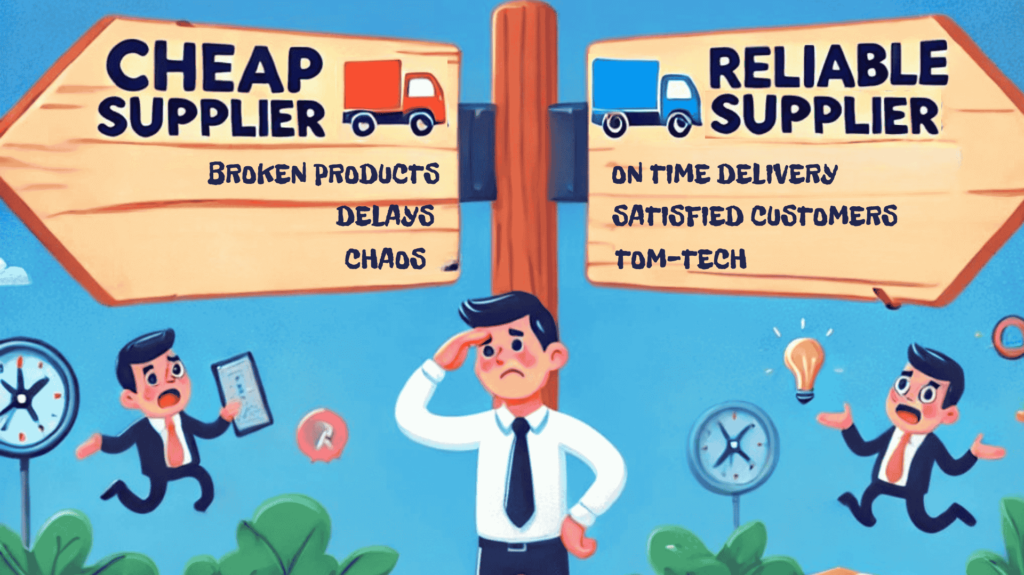
Procurement professionals often face the challenge of balancing cost and quality. While choosing a lower-cost supplier or material may seem like an easy way to save money, hidden expenses can quickly accumulate in the form of increased maintenance, supply chain disruptions, and operational inefficiencies. This blog explores how procurement teams can make smarter decisions by focusing on reliability, total cost of ownership (TCO), and long-term value instead of just the initial price.
Main Content
1. The Risks of Choosing a Supplier or Material Based Solely on Price
Opting for the cheapest supplier or material often comes with compromises that can lead to:
- Higher maintenance and repair costs
- Increased downtime due to defective materials or delayed deliveries
- Lower efficiency and higher long-term expenses
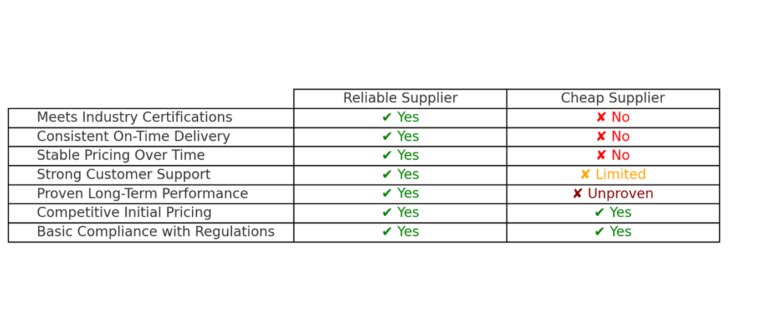
When a supplier cuts costs, it often reflects in lower-quality materials, unreliable deliveries, and poor customer support, which ultimately affects operations and profitability.
2. How to Identify a Reliable Supplier
a) Quality and Certifications
- Does the supplier meet industry standards and certifications?
- Are the materials tested for durability and safety?
b) Delivery Reliability
- What is the supplier’s track record for on-time deliveries?
- How do they handle supply chain disruptions?
c) Long-Term Performance and Total Cost of Ownership (TCO)
- Do they have a history of consistent performance with other clients?
- What are the long-term costs associated with their products?
- How do maintenance, repairs, and operational efficiency compare with alternatives?
3. Comparing Cheap vs. Quality Materials
a) Durability and Lifespan
- How long will the material last under normal operating conditions?
- Is there a significant difference in replacement cycles between cheaper and premium materials?
b) Maintenance Costs
- Do lower-cost materials require more frequent maintenance?
- How much additional labor and downtime will be needed for repairs?
c) Performance and Efficiency
- Are high-quality materials more efficient in operation?
- Will performance improvements justify a higher initial investment?
4. The Hidden Costs of Poor Supplier and Material Choices
When a supplier or material is selected based solely on price, unexpected expenses can arise. These hidden costs include:
- Rework and replacements: Inferior materials often lead to increased failure rates.
- Higher logistics costs: Delays or inconsistent supply chains can result in emergency shipping fees.
- Production delays: Missing components or poor-quality materials can halt operations.
- Increased warranty claims: More defective products mean more time spent on customer complaints and returns.
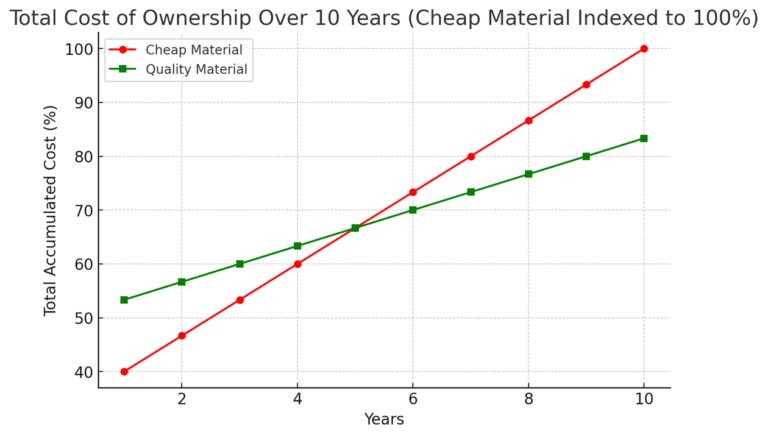
5. Calculating the Total Cost of Ownership (TCO)
To determine whether a lower-cost material or supplier actually saves money, procurement teams should factor in:
- Initial purchase price replacement frequency
- Maintenance and repair costs over the expected lifespan
- Operational efficiency gains from higher-quality materials
- Potential production losses due to material failures
6. Best Practices for Making the Right Procurement Decisions
To minimize risks and optimize procurement, companies should:
- Conduct thorough supplier assessments, including site visits and quality audits.
- Request samples or pilot projects before committing to large-scale orders.
- Build long-term partnerships with proven, reliable suppliers rather than constantly switching based on minor cost differences.
Conclusion
Choosing the right supplier and materials is about more than just finding the lowest price – it’s an investment in operational efficiency, quality, and long-term cost savings. By considering reliability, total cost of ownership, and supplier stability, procurement professionals can avoid hidden expenses and ensure a smooth supply chain. Making informed decisions leads to better business outcomes, improved profitability, and long-term success.